If you’ve ever spent a whole weekend scrubbing your bathroom, just to find the same cloudy, milky rings on your glass shower the very next day, you’re not alone. It’s one of the most frustrating cycles of home maintenance.
The truth is, those stubborn marks aren’t just dirt or soap scum. They're mineral deposits left behind when hard water evaporates. Understanding how to tackle these spots means looking at what causes them, how to clean them safely without ruining your expensive finishes and how to stop them from coming back for good.
What are hard water spots and what do they look like?
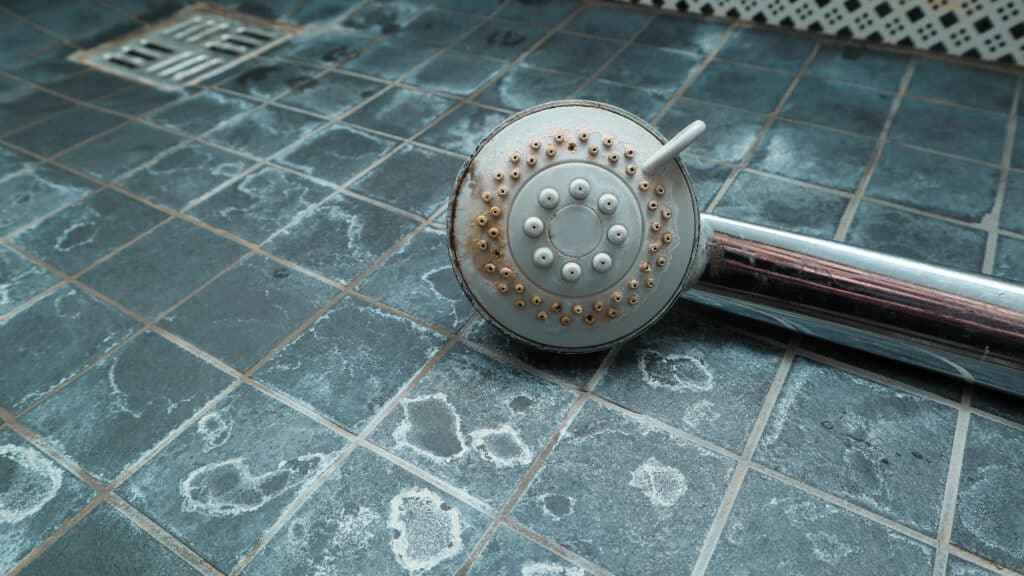
Hard water spots (often called water spots, limescale or scaling) are the chalky residues left behind when tap water evaporates on a surface.
When water contains high concentrations of dissolved minerals, mostly calcium and magnesium, it’s classified as “hard”. When a droplet of this water sits on a surface, and the water evaporates into the air, it can’t take the minerals with it. The minerals stay behind, crystallising into stubborn, circular rings with raised, rough edges.
While soap scum forms a dull, slippery film across your shower screen, hard water stains form distinct crusty patches. On glass, they can even create cloudy areas that make surfaces look perpetually dirty no matter how often they’re wiped.
Fresh spots vs. baked-on scale
The strategy you use to remove water stains will depend entirely on how long the minerals have been sitting on the surface.
Recent deposits
When water drops dry on a surface over a few days, the mineral bond is relatively weak. These water spots look like light, translucent white rings. Because they’re still soft and haven’t had time to chemically bond with the underlying material, they are relatively low-effort to remove using mild, non-toxic household cleaning solutions.
Heavy scaling
If hard water is left untreated for weeks or months (especially in areas exposed to heat, like a glass shower door or an outdoor tap), the minerals go through calcification. The layers of calcium build up, forming a thick grey or yellowish crust. Heavy scaling needs more intensive treatments often with commercial descalers, as the minerals can become increasingly bonded to porous materials and begin to etch the surface.
How to remove hard water stains from different surfaces
Because different materials react uniquely to cleaning agents, a one-size-fits-all approach will either not get rid of the stains or worse, ruin the look of your fixtures and finishes.
How to remove spots from shower glass and mirrors
Glass looks completely smooth, but under a microscope, it’s full of tiny peaks and valleys. Minerals can lodge themselves deep into these pores, which is why it’s not as simple as just wiping it away.
To properly clean glass without scratching it:
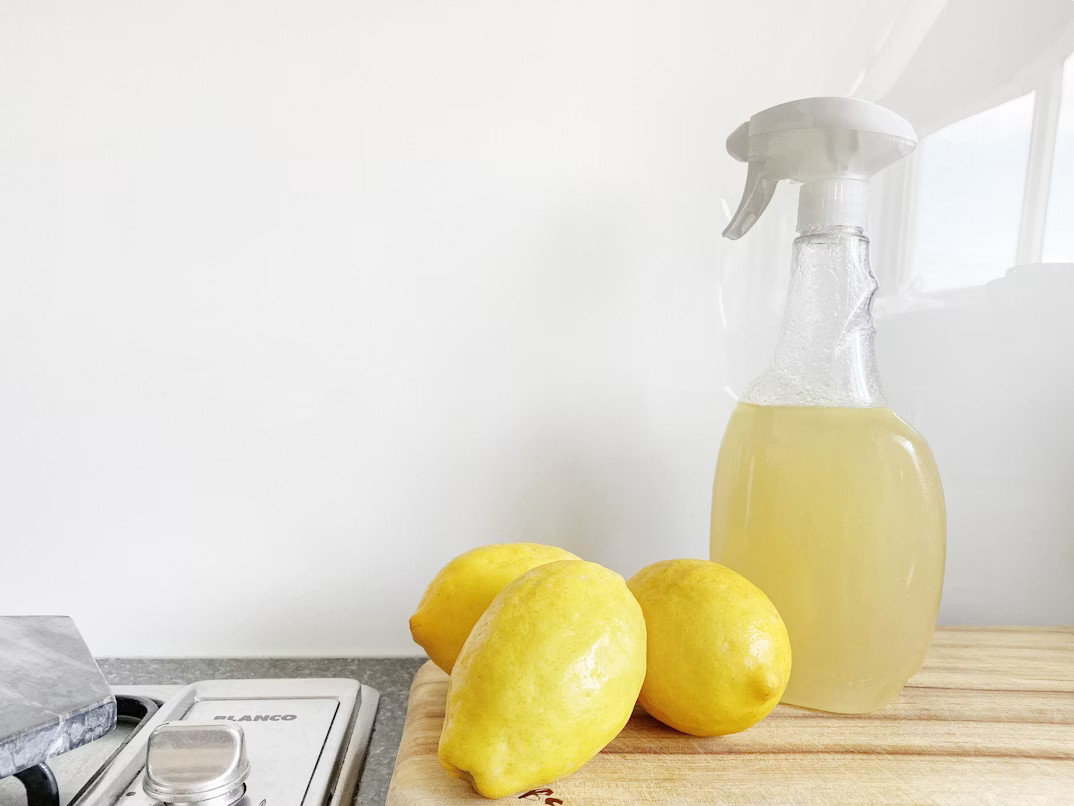
Fill a spray bottle with equal parts white vinegar and warm water. For extra stubborn areas, a splash of fresh lemon juice adds some extra citric acid.
Spray the solution generously over the glass shower door. Allow it to sit for 15 to 30 minutes so the mild acidity can chemically break the alkaline calcium bonds. Don’t let the water dry during this period and re-spray if necessary to keep it wet.
Gently scrub the surface using a non-scratch microfibre cloth. Rinse thoroughly with clean water and then immediately use a squeegee to remove all moisture.
How to clean stains from chrome and matte black taps
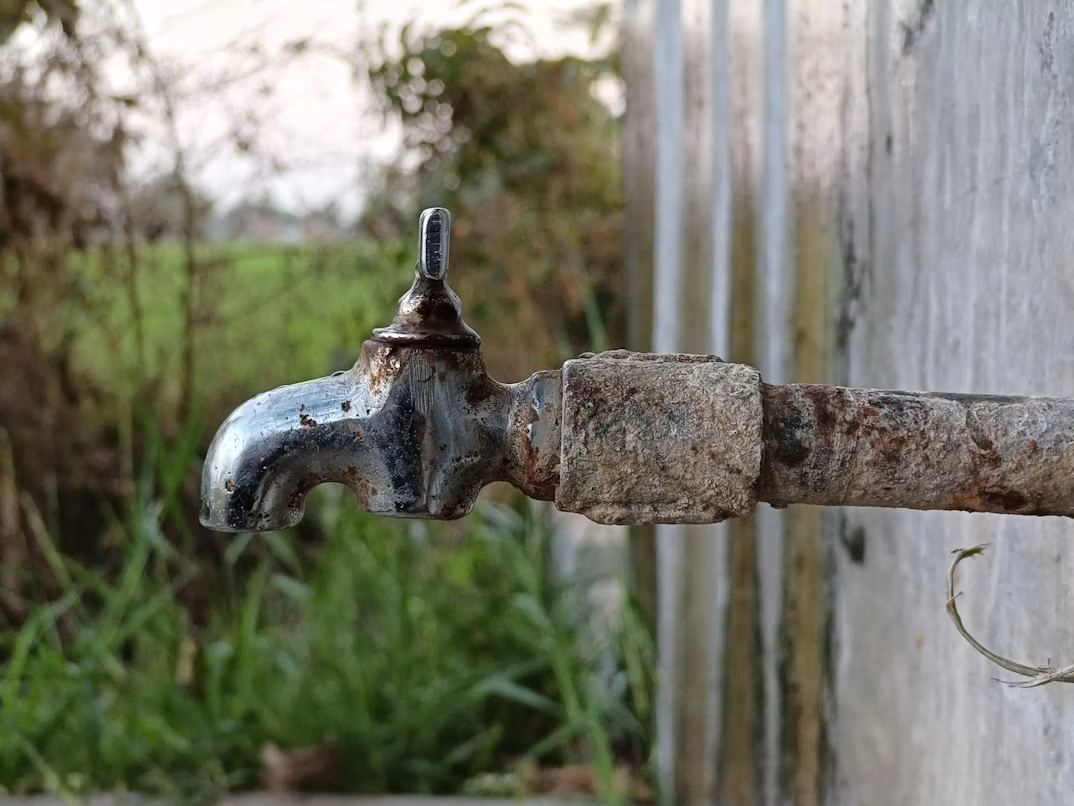
Modern tapware needs caution, because finishes like chrome and matte black react very differently to cleaning and different materials. Traditional chrome is very resilient to mild acids, but finishes like electroplating or matte black PVD have delicate outer coatings that are highly scratch-prone. Using abrasive pastes, baking soda scrubs or pumice stones will instantly ruin a matte finish and void your warranty.
For chrome, you can use a standard 50/50 vinegar spray, letting it sit for 10 to 15 minutes before wiping clean with a microfibre cloth and buffing dry.
For matte black, avoid leaving any acidic solutions on the surface for extended periods. Instead, soak a clean microfibre cloth in a highly diluted vinegar-and-water mixture and then drape it over the tap for no more than 5 minutes. Wipe it very gently, going with the grain of the fixture, then rinse immediately and buff dry with another microfibre towel.
How to get spots off car paint and clear coats
Automotive paintwork is very vulnerable to mineral damage. When hard water sits on a car bonnet under the hot sun, the metal heats up, causing the water to evaporate quickly and bake the minerals straight into the clear coat.
To get the stains off, only work on a completely cooled vehicle in the shade. Wash the car thoroughly first to remove loose dirt that could cause swirl marks. Use a dedicated car stain remover or a very diluted vinegar wash. Apply it directly to the spots with a microfibre towel, let it sit for a minute, then wipe it away without applying any heavy pressure. Follow up immediately with a quick detailer or spray wax to protect the clear coat.
What other damage does hard water cause in a home?
Visible water spots are just the surface-level symptom of a systemic issue inside your home. While you’re busy scrubbing the shower screen, the same accumulation of minerals is happening just out of sight, quietly causing deposits and build-ups throughout your entire property.
Appliances and hot water systems
Your dishwasher, washing machine and hot water system rely on internal heating elements. Hard water causes a thick layer of insulation-like scale to wrap around these elements. This forces the appliances to draw more electricity to heat the water, skyrocketing your power bills and reducing their lifespans.
Plumbing and pipe scale
Over time, calcium scale grows inside your pipes, narrowing the internal diameter, just like plaque in an artery. This hidden build-up permanently lowers household water pressure, strains your plumbing, and can eventually trigger catastrophic pipe failures inside your walls.
Skin, hair and laundry
Hard water minerals chemically bind to soaps and detergents, preventing them from lathering properly. Instead of rinsing clean, a curd-like residue is left behind on your body and clothing. This strips your skin’s natural oil barrier (exacerbating conditions like eczema), leaves hair feeling brittle and makes freshly washed laundry look stiff and faded.
Why does cleaning spots with vinegar damage surfaces over time?
When researching how to remove hard water spots, the internet will universally tell you to reach for vinegar or lemon juice (we did too). While these acidic DIY remedies work well as a temporary fix, relying on them as a weekly cleaning routine creates a destructive trap.
Vinegar is acetic acid. It works because its low pH strips away the high-pH alkaline mineral scale. The issue is, the acid doesn’t just stop once the calcium is gone. It keeps eating away at the underlying surface. The right dilution and the amount of time vinegar stays on your surfaces is key to avoid long-term damage.
Repeated acid exposure eventually wears down the protective factory sealants on stone benchtops, degrades and discolours the grout lines between your tiles, strips the specialised coatings on matte finishes and can even microscopically pit (cause a tiny cavity) your shower glass.
Ironically, as the surface becomes more damaged and deteriorated by the acid, it creates an even rougher texture for future minerals to cling to. This in turn accelerates the rate of new spots forming, locking you into a never-ending cycle of cleaning and damage.
What’s the best way to get rid of hard water spots permanently?
Sprays, squeegees and acidic cleaners are reactive solutions. They remove mineral deposits after they have already dried onto your surfaces, but they don’t address what causes the marks in the first place.
The next time someone showers, turns on a tap or washes the car, the water evaporates, and the same mineral deposits can form again.
Manage scale-causing minerals at the source
To reduce how often hard water spots appear, you need to manage the minerals associated with scale before the water travels through your home.
Traditional water softeners generally use an ion-exchange process to remove calcium and magnesium from the water. However, not every household needs a conventional softening system.
Depending on the local water conditions, a whole-home filtration system with specialised mineral-management media may help reduce the effects of scale-causing minerals.
Choose a point-of-entry filtration system
A point-of-entry system treats water as it enters the property, before it reaches your taps, showers, plumbing and household appliances.
When comparing whole-home systems, look for a solution that offers:
Filtration at the mains entry point
Strong flow rates across the home
Minimal ongoing maintenance
Targeted mineral management
A configuration tailored to your local water supply and household needs
A system designed around your property’s water profile will generally provide better results than a one-size-fits-all solution.
How Complete Home Filtration helps manage scale
Complete Home Filtration designs point-of-entry systems tailored to the water conditions at each property.
Depending on the system configuration, specialised resin media can help manage calcium, magnesium and other minerals associated with scale formation. Additional filtration stages can also reduce chlorine, sediment, heavy metals and other common impurities before the water moves through the home.
Rather than functioning as a traditional water softener, the system is designed to help minimise the effects of scale-causing minerals while improving the overall quality, taste and feel of the water.
FAQs
Can hard water permanently etch car paints?
Yes. If mineral deposits are left on a vehicle’s exterior under direct sunlight and high temperatures, the concentrated calcium crystals can chemically etch past the top layer of wax and eat directly into the clear coat. Once true etching occurs, the marks can’t be washed off and require paint correction to smooth out the surface.
Does a standard carbon filter fix hard water?
No. Standard inline carbon filters are highly effective at capturing volatile organic compounds (VOCs), removing chlorine taste and filtering out any unpleasant odours. However, dissolved minerals like calcium and magnesium are completely unaffected by carbon pores. Managing hard water scale typically requires either a traditional ion-exchange softener or a filtration system designed to help reduce scale-causing minerals, depending on your local water conditions.
Will baking soda and vinegar remove stubborn limescale?
While combining baking soda and vinegar creates a fun chemical reaction, it's actually counterproductive to treating mineral scale. Vinegar is an acid and baking soda is a base; when mixed together, they neutralise each other, leaving behind a solution that’s mostly water. To dissolve stubborn limescale, you’ll need the sustained acidity of a dedicated vinegar soak or a targeted citric acid cleaner to break down the minerals effectively.
Are hard water stains permanent?
Not initially, but they can become permanent if they’re neglected. While fresh water spots can be dissolved with mild acids, heavy scaling left on surfaces like glass or car paint for extended periods will eventually etch the material. Once the mineral deposits physically pit or eat into the surface, the damage is permanent, even if the buildup itself is scraped away.