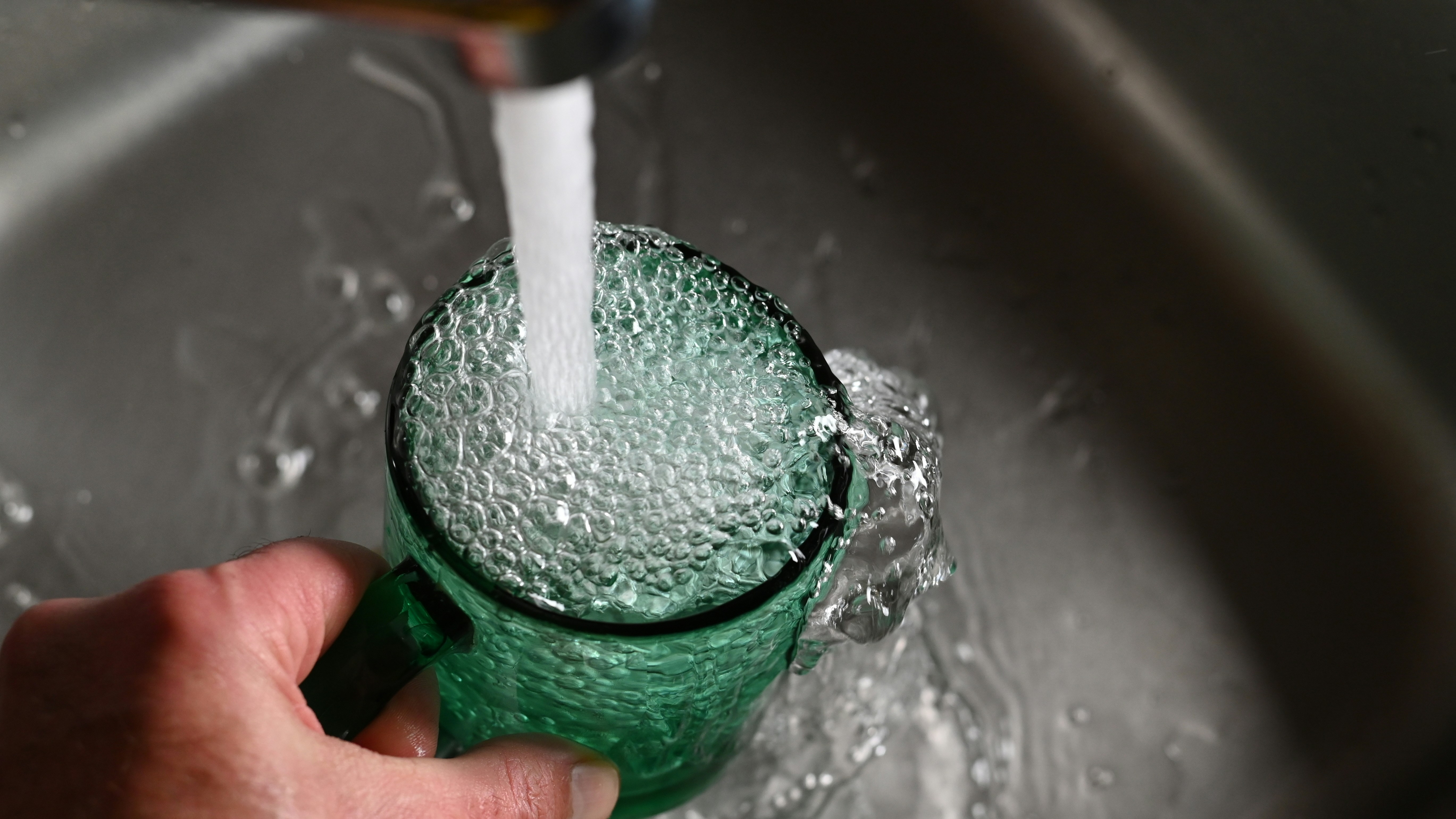
If you live in Sydney, you might wonder whether the water from your tap is safe to drink. The answer is yes. Sydney’s treated drinking water is disinfected and regularly monitored to meet the Australian Drinking Water Guidelines, so it’s considered safe to drink straight from the tap.
That doesn’t mean every home will have the same water. Taste, smell and mineral levels can vary between areas, while plumbing and fittings on the property can also affect the water coming from your taps.
How safe is Sydney’s tap water?
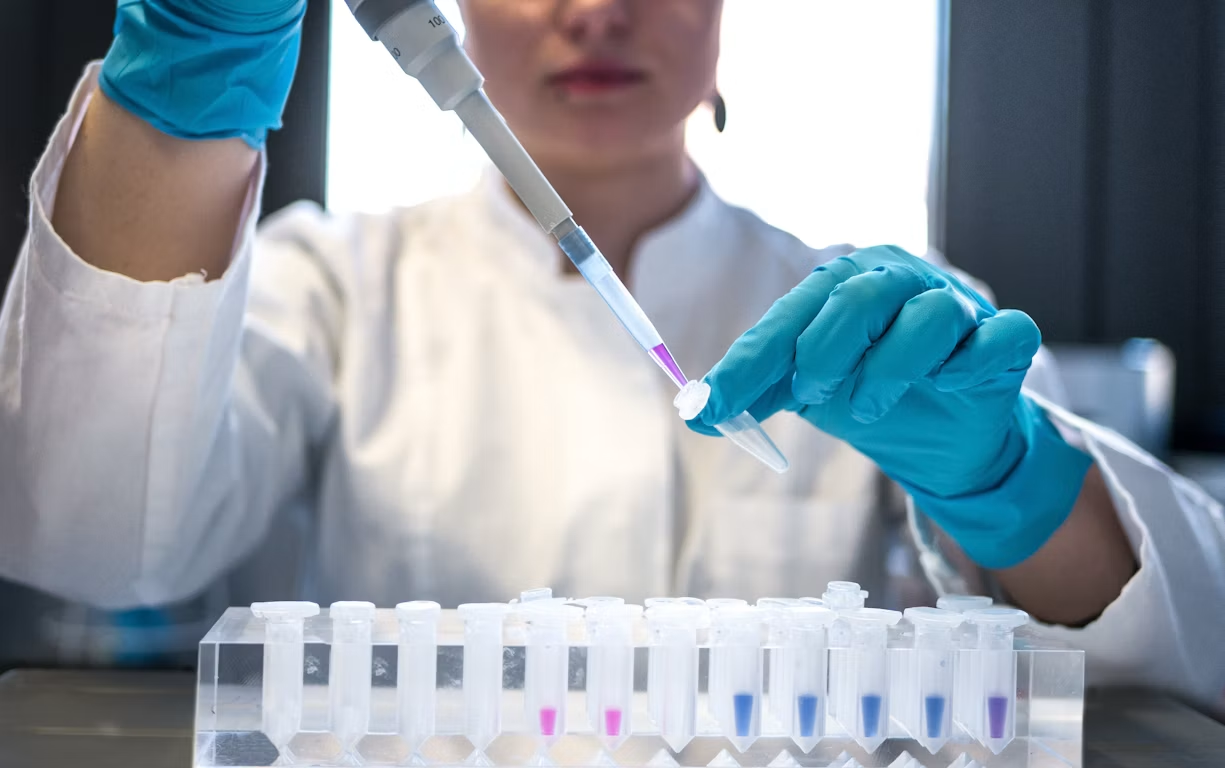
Sydney Water runs nine water filtration plants and monitors drinking water from the source through to the network. Its monitoring program covers around 70 aspects of water quality, including microorganisms, chemical levels, colour, taste and smell.
The Australian Drinking Water Guidelines (ADWG) provide the framework for assessing water quality in Australia. They include health-based guideline values as well as measures for characteristics like taste, odour and appearance. Sydney Water’s published reports assess their water against these guidelines, while NSW Health regulates Sydney’s public water supply.
So, is it safe to drink tap water in Sydney? Yes, for households connected to the treated public supply, the water coming from your taps is safe.

What's in Sydney tap water?
Water isn’t chemically pure, and naturally sourced water carries a range of minerals and other substances. Sydney’s water is treated before it reaches customers, and Sydney Water monitors the supply to ensure it meets the relevant guidelines.
Some substances are added deliberately as part of treatment, while others occur naturally or may be present at very low concentrations because of the source and treatment process.
Chlorine and chloramine
Disinfection is an important aspect of keeping drinking water safe. Chlorine controls microorganisms that could cause illness, while Sydney Water also uses chloramination in many of its supply systems.
Chloramination combines chlorine and ammonia to form chloramine, which can travel farther through the distribution network than chlorine alone.
These disinfectants are used in controlled amounts and are routinely monitored. However, their presence can contribute to the taste and smells some people notice in Sydney’s tap water.
Fluoride
Fluoride is a naturally occurring mineral found in water, soil and rocks. Sydney also adds it to drinking water because it helps strengthen tooth enamel and reduce the risk of tooth decay. The amount added to drinking water is carefully controlled and routinely monitored by Sydney Water. It’s maintained within the requirements of the NSW fluoridation program and applicable drinking water guidelines.
PFAS
PFAS, or per- and polyfluoroalkyl substances, are a group of long-lasting chemicals monitored in drinking water because some types can remain in the environment for years.
Sydney Water regularly tests water at its plants for PFAS and publishes the results. Its current monitoring shows PFAS concentrations below the ADWG for specific compounds, including PFOS, PFHxS, PFOA and PFBS. They also test for a wider range of compounds as part of their ongoing monitoring.
The presence of a substance at a measured level doesn’t, by itself, mean the water is unsafe to drink.
Disinfection by-products
Disinfectants can react with naturally occurring organic material in water, forming compounds known as disinfection by-products. Common examples include trihalomethanes, which can form during treatment.
These compounds are present at very low levels in treated water and are monitored because higher concentrations of some by-products can have health effects over long periods.
Minerals and water hardness
Minerals occur naturally in water and contribute to its hardness. Hardness is determined mainly by the amount of calcium carbonate in the water and can affect how water behaves around the home, including how much scale forms in kettles, appliances, and hot water systems.
Sydney Water classifies water below 60 mg/L of calcium carbonate as soft, reporting Greater Sydney’s drinking water at around 57 mg/L. This means Sydney’s mains water is typically considered soft, although the water characteristics can change between supply systems.
Why does Sydney tap water taste or smell different?
Sydney tap water can taste or smell different from one home to another, and even change over time. Water may spend different amounts of time in reservoirs, pipes, and household plumbing before it reaches your taps, which can affect your experience.
Temperature can also affect how noticeable certain tastes and smells are. Changes in water source, treatment processes or conditions in the distribution network can also affect what you notice at home.
If your water develops a sudden or consistent change in taste, smell, colour, or appearance, it’s worth calling Sydney Water to investigate the cause instead of assuming it's normal.

Can your home affect your tap water?
The water supplied from the source isn’t necessarily the same as the water you get from the tap. The ADWG recognises that water quality can change beyond the supplier’s point of delivery (usually the water meter), because of internal plumbing, fittings and conditions within a property.
Plumbing materials can interact with the water over time, especially where it’s been sitting in pipes for extended periods. Sediment can accumulate in pipes and then be disturbed by changes in flow. Metals like copper can enter the water through plumbing, and older, deteriorating fittings can also affect water quality.
If a change in water quality is isolated to your property or a few particular taps, consider your home’s plumbing and water storage as possible causes.
Do you need a water filter in Sydney?
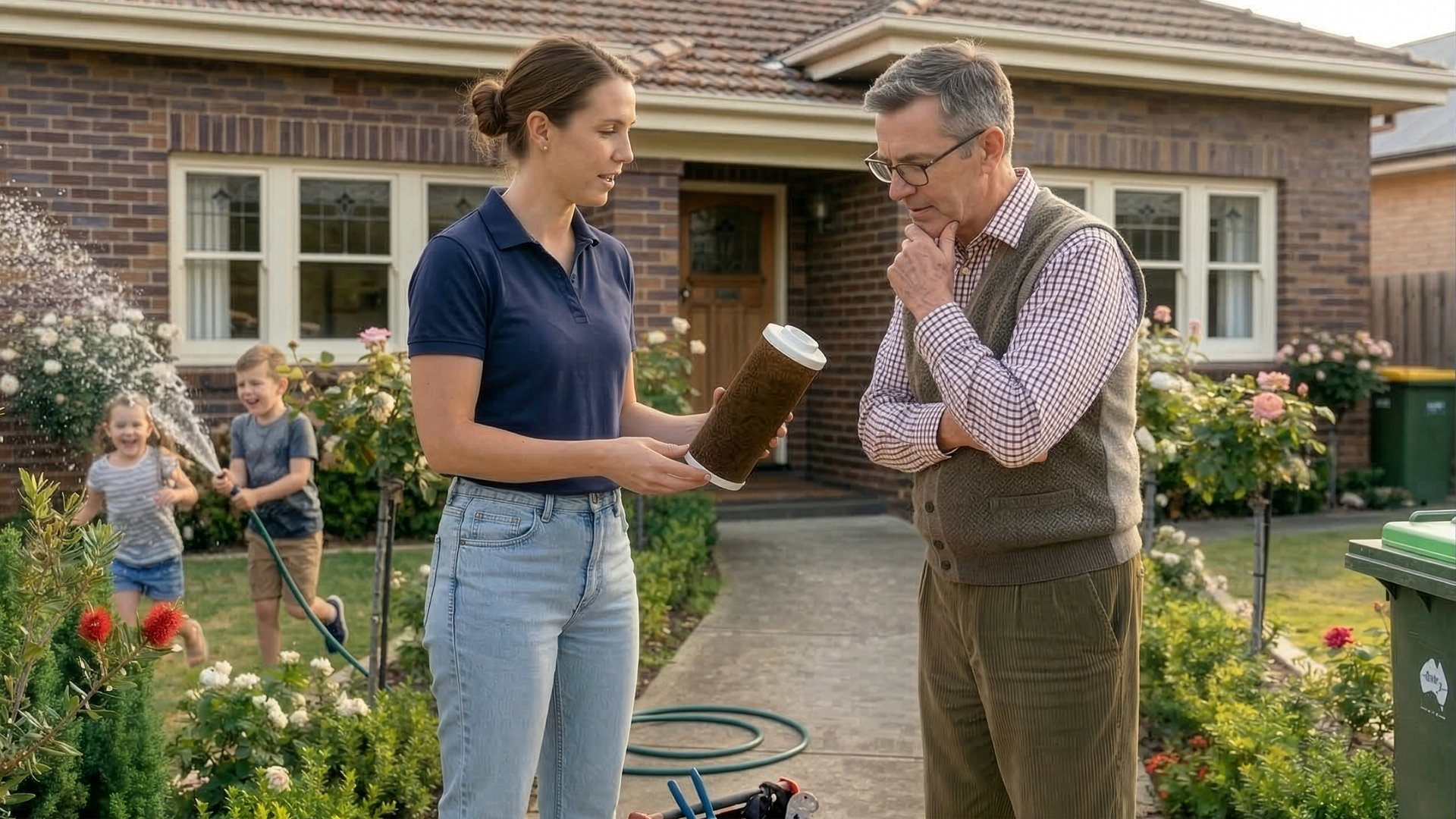
For most households connected to Sydney’s treated public water supply, a filter isn’t necessary to make the water safe to drink. NSW Health states that you generally don't need to filter treated tap water for safety, as long as it’s been treated properly.
However, there are other reasons you might want to filter water for your household and family. Some people want to reduce chlorine or chloramine taste and smell, while others want to address sediment, specific water traits, reduce the presence of heavy metals or the effects of their property’s plumbing on their water. Our customers also look to soften the water to help make their skin and hair feel fresher and more youthful.
The kind of filtration matters too. Different technologies are designed to target different substances, so choosing a system should start with understanding your supply, the property and what your actual goals are.
For Sydney homes considering whole home filtration, Complete Home Filtration assesses your water and household requirements before designing your system. This allows for filtration to be set up and built around the conditions on your property instead of treating every home like it has the same water and needs.
Sydney tap water FAQs
Is Sydney tap water safe to drink without a filter?
Yes. Treated mains water supplied through the public drinking water network is considered safe to drink without a filter.
A filter can still be helpful if you want to address particular characteristics of your water, like taste or smell, or address concerns specific to your home.
Does Sydney tap water contain chlorine?
Yes. Chlorine is used as part of the disinfection process, and Sydney Water also uses chloramination in many of its water supply systems. These disinfectants help to control microorganisms and maintain water quality throughout the network.
The concentration is controlled and monitored, although some households can notice chlorine or disinfectant-like tastes and smells.
Does Sydney tap water contain fluoride?
Yes. Fluoride is added to Sydney’s drinking water to help prevent tooth decay, in line with NSW Health guidelines. Sydney Water routinely monitors these levels as part of its daily water quality program.
Are there PFAS in Sydney tap water?
Sydney Water monitors its drinking water for PFAS and publishes the results. Current results show concentrations below the relevant ADWG levels for the specified PFAS compounds.
PFAS monitoring is ongoing, with Sydney Water currently testing for 41 PFAS compounds as part of its program.
Is Sydney tap water hard or soft?
Sydney tap water is generally considered to be soft. Sydney Water reports Greater Sydney’s drinking water at around 57 mg/L of calcium carbonate, with water below 60 mg/L classed as soft.
Water hardness can affect the prevalence of scale and the way water interacts with appliances and plumbing, but Sydney’s relatively soft mains water means hardness isn’t generally a major water quality concern across the metro supply.
While Sydney water is considered soft, many of our customers also look to our systems to soften their water even further for added skin and hair benefits.
Why does my Sydney tap water taste or smell unusual?
An unusual taste or smell can have several causes, including disinfectants like chlorine or chloramine, changes in the local water supply or conditions resulting from your property’s plumbing.
If the change is sudden or persistent, it’s worth checking with Sydney Water and investigating your property rather than assuming the supply itself is the cause. Water quality can change in between the supplier and the tap because of materials, fittings, stagnation and other factors.
Where your mains water is safe, but you want to improve the taste, smell, hardness or clarity, a properly configured home filtration system can offer an effective long-term solution.