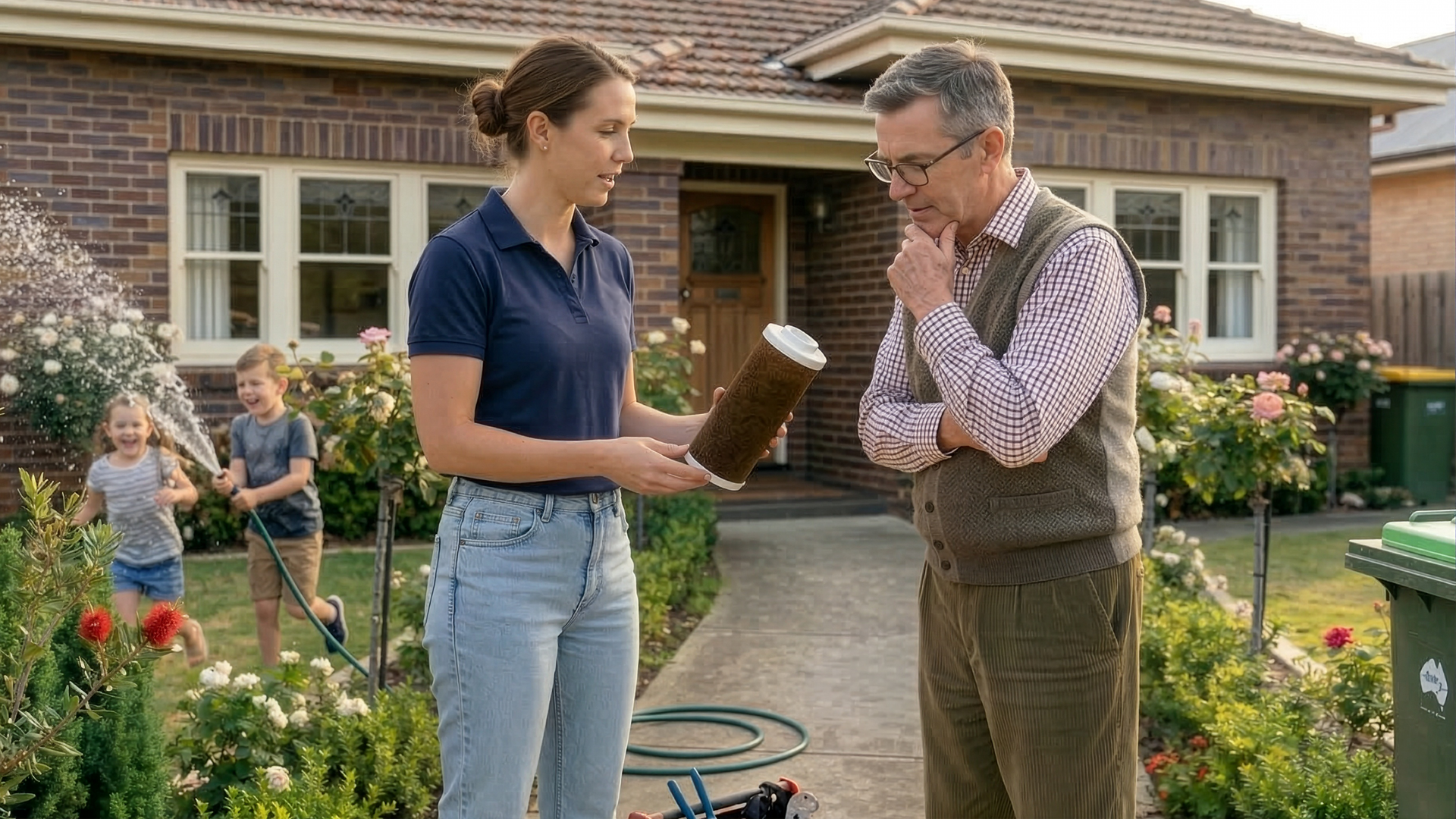
If your tap water has a noticeable “pool” smell or has an off, chemical taste, chlorine might be the culprit.
Australian water suppliers use chlorine to disinfect public drinking water and control harmful microorganisms as it travels through the supply network. However, some homes prefer to reduce the chlorine taste and smell before using their water for drinking, cooking and washing.
There are a few ways to reduce chlorine in your water, but the right one for you depends on how much water you want to treat, whether your supply uses chlorine or chloramine and whether you want to target your drinking water or the whole home.
For occasional use, simple tricks might be enough. If you want consistent reduction across your whole home, a filtration system designed for chlorine might be the more practical option.
Why is chlorine added to tap water?
Chlorine is added to public water supplies to help make drinking water safe. It disinfects water by controlling harmful bacteria and viruses, while a residual amount helps protect the supply as water travels through pipes to homes and businesses.
The residual is crucial, as water can be exposed to contamination risks once it leaves the treatment plant. Maintaining disinfection throughout the network helps protect your water quality until it reaches the tap.
Although it serves an important purpose, it can affect the taste and smell of your water. Understanding why it's there and how it behaves will help you decide whether reduction at home is worthwhile.
Why Australian water supplies use chlorine
Australian water authorities employ disinfection as part of their water treatment processes. Chlorine is widely used because it’s effective against many harmful microorganisms and can maintain its disinfecting properties throughout the network.
The amount of chlorine in your water can vary depending on your supplier, treatment, network conditions and how far the water has to travel to get to you. Australian drinking water guidance recognises that people can detect chlorine by smell or taste at concentrations below those used for disinfection.
A noticeable taste doesn’t automatically mean your water is unsafe. Public drinking water supplies are strictly managed against health guidelines, so chlorine levels need to be considered in the context of the whole process and overall water quality.
How chlorine affects the taste and smell of water
Chlorine can give tap water a swimming pool-like smell or a sharp, chemical taste. Some people notice it as soon as they’re filling a glass, while others detect it in their tea, coffee or food prepared with tap water.
Intensity can shift between households and over time. Changes in water treatment, temperature and conditions in the network will all influence the disinfectant residual reaching your property.
If the taste or smell bothers you, reducing chlorine might make your drinking water more enjoyable. Activated carbon filtration is commonly used for this as it’s able to reduce chlorine as well as improve taste and smell, when the filter is appropriately designed and maintained.
A sudden or strong change in your water’s smell, colour or taste shouldn’t automatically be pinned on chlorine levels. Contact your water supplier if you notice a persistent, unusual change in your water quality.
Chlorine vs. chloramine: what’s the difference?
Chlorine and chloramine are both used for disinfecting water, but they behave differently.
Chloramine is created when chlorine reacts to ammonia. Suppliers use it because it stays stable for longer in distribution networks, allowing for disinfection over extended distances.
The distinction matters when trying to reduce the concentration in your water. Free chlorine is able to dissipate when water is left exposed to air, but chloramine is more persistent and doesn’t dissipate in the same way under ordinary conditions.
While standard activated carbon handles free chlorine effectively, chloramines require catalytic carbon, a modified, high-activity media specifically engineered to break the strong chlorine-ammonia bond at normal household flow rates. Performance will depend on the carbon media, water flow, contact time and operating conditions. If you want to reduce both, check the manufacturer data rather than assume your filter treats both equally.
How to reduce chlorine from tap water at home
You can reduce chlorine in a couple of different ways. Some approaches are suited for a jug of water, whereas others are meant for regular household use:
Letting water stand
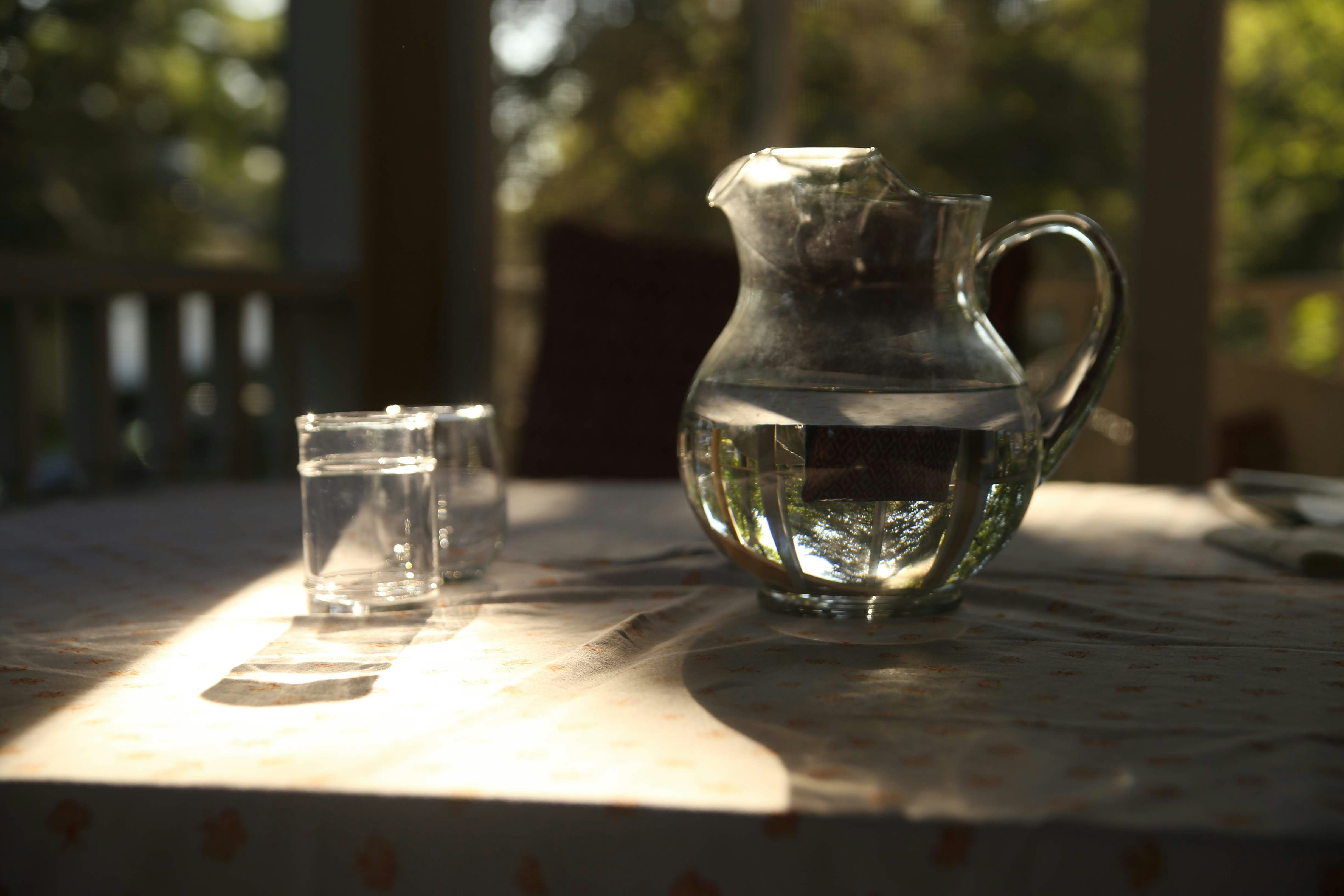
Leaving tap water in an uncovered jug lets free chlorine dissipate into the air. This is a simple, low-cost option when you want to improve the taste of a small amount of water, or prepare it for a specific use.
The time needed depends on water chemistry, temperature, air exposure and the amount of water. There’s no universal timeframe that guarantees a certain level of chlorine reduction.
Use a clean container and don’t leave dechlorinated water at room temperature for extended periods. For more consistent results, an adequate filter is usually more practical.
This method is also a lot less effective against chloramine, which stays in water longer. If your supply uses chloramine, leaving a jug on the bench might not do much to help.
Boiling water
Heating water can speed up the dissipation of free chlorine, making boiling an option for treating small amounts of water. The amount of chlorine reduced depends on factors like heating time, temperature and the water’s chemical profile.
Boiling isn’t a reliable way to reduce chloramine and isn’t a substitute for a filter designed to reduce both disinfectants. It also requires a commitment of time and energy, especially if you need to treat several litres of water every day. You need to wait for the water to cool before drinking and store it in a clean, covered container.
Boiling water is often suggested as a general way to improve water quality, but it doesn’t remove every contaminant. As water evaporates, some dissolved substances can become more concentrated.
Using vitamin C
Vitamin C, also known as ascorbic acid, can chemically neutralise chlorine. It’s sometimes used to treat water for bathing or other specific cases where reducing the disinfectant residual is a priority.
The amount necessary will depend on the disinfection concentration, water volume and treatment conditions. Vitamin C shouldn’t be added to drinking water using an arbitrary household dosage, and products made for baths or cleaning shouldn’t be assumed to work for drinking water too.
Remember to distinguish chlorine from chloramine. Chemical treatment requirements can differ, so a method for one isn’t going to necessarily perform the same for the other.
If you’re considering vitamin C for an aquarium, fish tank or garden, make sure you’re following the appropriate guidance on use with the species or plants involved. Aquatic environments are especially sensitive to disinfectant levels, so adding an estimated amount of vitamin C isn’t a substitute for actually checking the water.
Using a water filter
A water filter designed to reduce chlorine offers a convenient way to improve the taste and smell of tap water. Unlike leaving water to stand or boiling it, filtration treats water as it passes through the system.
Activated carbon is widely used for chlorine reduction. Its performance depends on the type and quantity of carbon, the time water spends in contact with the media, the flow rate and the condition of the filter.
Different filters are designed for different jobs. A jug or under-sink filter might suit a household that just wants to improve drinking water, while a whole home system can treat water entering the property.
Check the manufacturer’s stated chlorine reduction performance and replacement schedule before choosing a filter. A filter that’s reached the end of its service life is no longer going to perform as intended.
If you want to reduce chlorine at multiple taps and showers, consider a point-of-entry system rather than relying on a filter installed at one outlet.
Which water filters reduce chlorine?
Not every filter is made to address the same substances. Some are focused on sediment, while others use carbon to target taste and smell. Reverse osmosis (RO) systems use a different process entirely and commonly incorporate carbon stages as part of the design.
Activated carbon filters
Activated carbon filters are a very common choice for chlorine reduction. The carbon has a highly porous structure that provides a large surface area for adsorption, allowing certain substances to interact with and be retained by the media.
When a carbon filter is designed for chlorine, it can reduce the concentration responsible for the pool-like taste and smell some households notice in tap water.
Performance isn’t identical across all carbon filters, though. A filter that works well at one flow rate might perform differently when water passes through it more quickly, with the media, amount of carbon, water flow and contact time all affecting the result.
Chloramine reduction also needs special attention. Standard chlorine reduction doesn’t automatically mean that it’ll reduce chloramine to the same extent.
Look for test results or manufacturer specifications that identify the actual substances reduced and the conditions under which the performance was assessed. Replace cartridges according to the specified service interval and applicable usage limits.
Under-sink water filters
Under-sink filters get installed beneath a sink and supply filtered water through a dedicated tap or integrated tap setup.
They can be a sensible option if your main concern is the taste and smell of the water used for drinking and cooking. Because the filter treats water at a single location, it doesn’t reduce chlorine at other taps in the home.
Many under-sink systems use activated carbon, while some combine multiple filtration stages to address additional substances. The number of stages alone doesn’t indicate how well a system will reduce chlorine. The media type and verified performance data matter more than stage count.
Before choosing an under-sink filter, consider its rated flow, replacement costs, available space and the substances it’s designed to reduce.
Reverse osmosis systems
Reverse osmosis systems force water through a semi-permeable membrane to reduce a range of dissolved substances. They’re often used where households want more treatment of water than a standard carbon filter can offer.
Most reverse osmosis systems incorporate carbon filtration before the membrane. This is a key step in the process, because free chlorine can damage certain RO membranes. The system’s pre-filtration stages need to be suitable for the incoming water and the membrane used.
An RO system might be best if you want to address multiple water concerns, but it’s not automatically necessary to reduce chlorine taste and smell. An adequate activated carbon filter may be more than enough for that purpose.
RO systems also have their own maintenance requirements, including membrane and cartridge replacement, with some designs producing wastewater during operation.
Whole home water filtration systems
A whole home water filtration system is installed where water enters the property, letting it treat the whole supply before it reaches the home’s taps, showers, baths and appliances.
For households that want to reduce chlorine beyond the kitchen sink, this method offers more coverage than an under-sink or jug filter. Water is treated at the point of entry instead of at individual outlets.
The system needs to use media suited to the substances you want to reduce. Activated carbon is commonly used for chlorine reduction, but the effectiveness of a particular setup is dependent on its design, flow rate, contact time and service condition. Chloramine reduction should be checked separately.
Whole home systems also need to accommodate the property’s water usage patterns. A system that reduces chlorine effectively at a low test flow might not deliver the same performance if water passes through it too quickly during simultaneous showers, laundry and general home use.
How to choose the right chlorine filtration method
The right approach hinges on where you want to reduce chlorine, how much water you use and whether your supply carries free chlorine, chloramine or both. It's these factors that’ll help you pick the setup that suits your home instead of paying for filtration you don’t need.
Do you only want to improve drinking water?
If chlorine mostly affects the taste or smell of your drinking water, a jug filter or under-sink system might be enough. These options treat a relatively small volume of water and are designed around drinking and cooking needs.
A dedicated drinking water system can also make sense if you want to combine chlorine reduction with the treatment of other issues, provided the chosen system has adequate capabilities.
Think about how much filtered water your household uses every day, how quickly you need it available and how often you’re willing to replace cartridges.
If the concern is limited to the kitchen tap, a whole home system might not be necessary. If you want to improve water at multiple outlets, a wider approach is worth considering.
Do you want to reduce chlorine in the shower and bath?
A filter installed at the kitchen sink doesn’t treat water that’s used in the bathroom. If you want to reduce chlorine in shower and bath water as well as drinking water, consider how the system treats water across the property.
A whole home system is installed before water is distributed to individual outlets. This means the same stages can treat showers, baths, kitchen taps and other outlets in the system’s design limits.
The difference is coverage. It’s not a guarantee that every possible water quality issue will be resolved. The system still needs to be configured for the relevant contaminants and household flow requirements.
Check the filter’s chlorine reduction performance
Look beyond generic claims like “improves water quality”. Check whether the manufacturer provides specific information about chlorine reduction, including the test conditions, rated capacity and flow rate.
A filter’s performance will depend on how it’s designed and operated. Water that passes through carbon too quickly gets less contact with the media, affecting chlorine reduction. Cartridge condition and current water quality will also influence the results.
Where available, look for independent testing or certification relevant to the exact model and the claim being made. Check that the documentation covers chlorine reduction rather than assuming a certification for another characteristic covers it.
Check whether the filter can reduce chloramine
A filter that reduces free chlorine might not offer equivalent protection against chloramine. This is worth considering as chloramine is more persistent, which is why it's used by water suppliers to maintain disinfection across their networks.
If you want to reduce both chlorine and chloramine from tap water, check the exact filter specifications and testing information for both. Some systems use carbon or cartridges specifically intended to treat chloramine, but suitability should be checked against the performance evidence.
Don’t rely on taste or smell alone to decide what’s present in your water. If you’re unsure about your local supply, check with your water provider.
Check the filter’s lifespan, flow rate and replacement costs
A filter’s purchase price is only part of the cost. Replacement cartridges, servicing and the system’s expected lifespan all affect the true cost of ownership.
Check how often the manufacturer recommends replacing the filter, whether that interval is based on time, water volume or both, and whether incoming water quality can affect cartridge life.
Flow rate is especially important for whole home systems. The filter needs to accommodate your household’s regular demand while providing the intended treatment. If multiple outlets are on, a system that’s too small may restrict the flow or provide inadequate contact time for the targeted reduction.
For whole home filtration, also consider any installation requirements, access for maintenance and the availability of replacement cartridges. A system is more practical to own when its maintenance requirements and running costs are clear from the beginning.
Does reducing chlorine make tap water safer?
Reducing chlorine can improve the taste and smell of tap water, but it doesn’t make your drinking water safer. Chlorine is used to control microorganisms, and maintaining an appropriate disinfectant residual is a critical part of protecting public water supplies.
That’s why your reason for filtration matters. If your issue is an unpleasant taste or smell, getting the right filter might help. If you suspect contamination or notice a sudden change in your water, contact your water supplier before trying a filter.
Chlorine and drinking water safety in Australia
Australian drinking water supplies are managed using the Australian Drinking Water Guidelines, which address microbiological quality, chemical substances and other characteristics of drinking water.
The guidelines recognise the importance of disinfection in preventing waterborne disease. They also establish health-based guidance for chlorine concentrations in drinking water. The relevant value for total chlorine is 5 mg/L, although this shouldn’t be interpreted as a target concentration for every supply.
Some people are able to detect chlorine by either taste or smell at concentrations far below that value. That’s why noticing a taste or smell isn’t, on its own, evidence that the water breaches water health guidelines.
What to know about chlorine and disinfection byproducts
Chlorine can react with naturally occurring organic matter in water to form disinfection byproducts, including trihalomethanes and haloacetic acids. Water treatment processes are designed to manage both effective disinfection and the formation of these byproducts.
Their presence isn’t an indication that chlorinated tap water is unsafe. The measure is the concentration of particular byproducts and how they compare with guideline values.
Some filtration technologies can reduce specific disinfection by-products, but performance varies by substance and system. Claims about chlorine reduction don’t establish that a filter also reduces trihalomethanes or other by-products.
FAQs
How long does it take to reduce chlorine from tap water?
The time depends on the method. Free chlorine can dissipate when water is left exposed to the air, but the rate varies with water conditions and exposure. Boiling can speed up the process, while a water filter can reduce chlorine as water passes through it. Neither leaving water to stand nor boiling offer a reliable timeframe for a specific level of reduction.
Can you reduce chlorine from tap water without a filter?
Yes. Leaving water in an uncovered, clean container can help reduce free chlorine and heating water up can speed up its dissipation. However, neither method reliably reduces chloramine under regular household conditions. For regular use, a filter designed for the disinfectant in question is the more practical approach.
How can I tell whether my water contains chlorine or chloramine?
Check with your local water supplier, which may publish information about the disinfectant used in your area. You can also ask the supplier directly if the information isn’t available online. Taste and smell alone aren’t reliable ways to tell chlorine from chloramine, so check your supply before choosing a filter.
Will a chlorine water filter affect water pressure?
It can. Water has to pass through the filter media, which creates some resistance to flow. The effect depends on the system’s design, filter condition and flow rate. For whole home filtration, check the system’s rated flow and pressure requirements against your household’s needs, especially if showers, taps and appliances all run at the same time.
How do I know when a chlorine water filter needs replacing?
Follow the manufacturer’s replacement schedule and any rated capacity limits. Some cartridges have a specific service life based on time, water volume or both. A change in taste or smell might mean a cartridge needs attention, but not noticing anything doesn’t prove it's still reducing chlorine effectively. Replace cartridges as directed rather than rely on taste alone.
Does a chlorine water filter reduce other contaminants?
Not necessarily. A filter’s ability to reduce chlorine doesn’t establish how it performs against other substances, like sediment, heavy metals, chloramine or disinfection byproducts. Check the specifications and test results for the exact model to check which substances it’s been assessed to reduce.