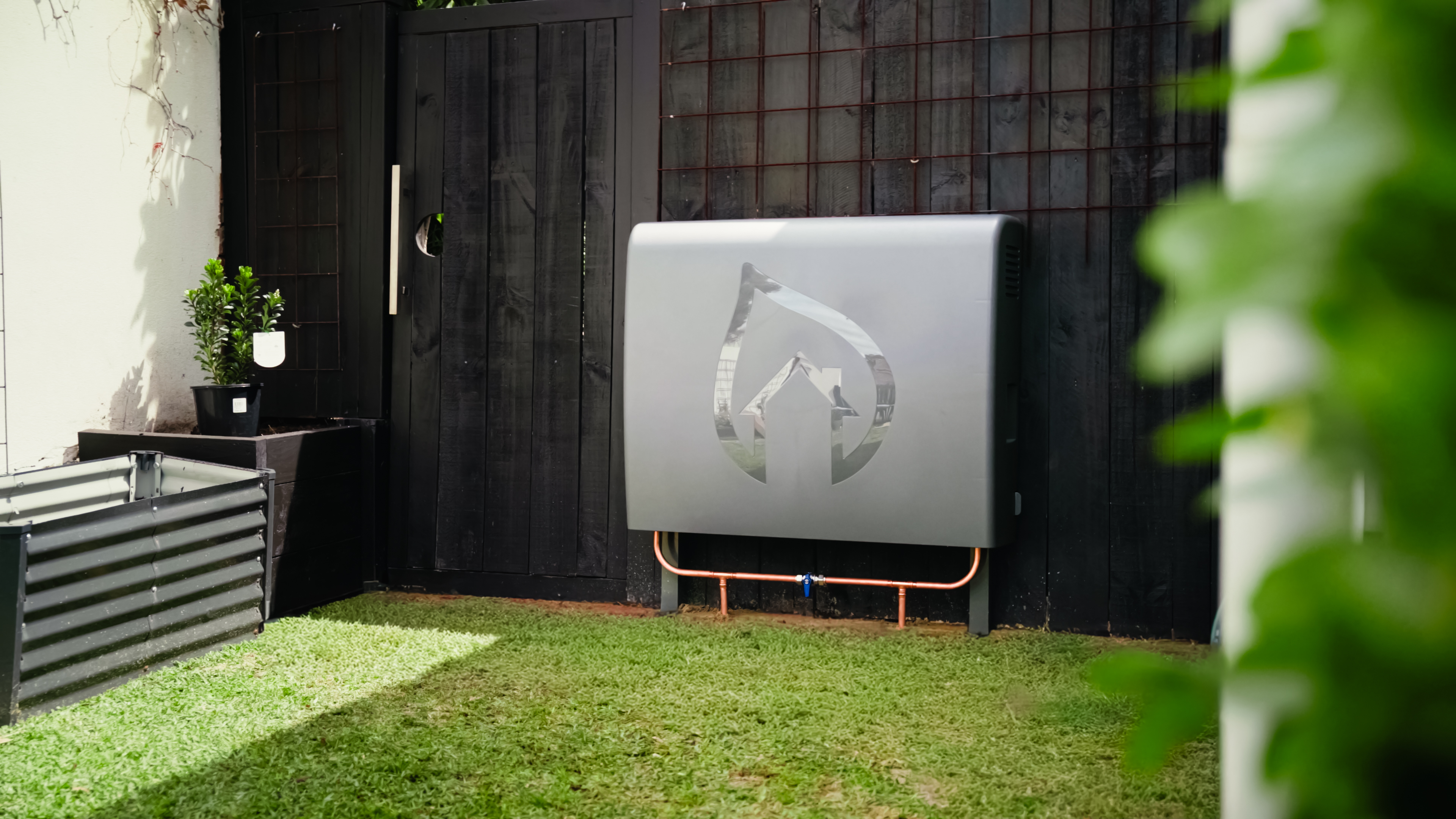
Choosing between a whole home water filter and an under sink system really comes down to how much water you want to treat and what issues you want to address. Both can improve the quality of your water, but they work in different ways.
A whole home water filtration system treats water as it enters your property, supplying filtered water to taps, showers, appliances and other outlets. An under sink system treats water at a dedicated tap, with reverse osmosis (RO) offering an extra layer of filtration for drinking and cooking.
The right choice for you depends on your property’s water, household needs and the kind of results you’re expecting. Understanding how each of the systems work will give you more confidence in comparing their capabilities.
Whole home vs under sink water filters: what's the difference?
The biggest difference is where the filtration actually happens and the volume of water you want to treat in your home. A whole home system is installed on your incoming water supply and filters water for the entire home, while the under sink filters connect to a specific outlet to filter water at one tap.
This shapes which parts of your home receive filtered water, the types of treatment available and how you use the system every day.

How does a whole home water filter work?
All water passing through the entry point to your home is treated before reaching your taps, showers, laundry and appliances.
The system uses multiple filtration stages, with each stage designed to address specific quality concerns. These can include:
Sediment filtration: Captures particles like dirt, sand, rust and silt before they reach your plumbing and appliances.
Activated carbon: Reduces chlorine, disinfection byproducts, chemicals and compounds that can affect taste and smell.
Water softening: Uses ion-exchange resin to reduce calcium and magnesium, the main culprits of hard water and limescale.
Specialised media: Targets particular contaminants, like heavy metals, chloramine or PFAS (where the system has been designed for it).
Not every whole home system carries the same media or offers the same treatment. The setup of your system needs to reflect the property’s water profile and the filtration goals of the home.
How does an under sink water filter work?
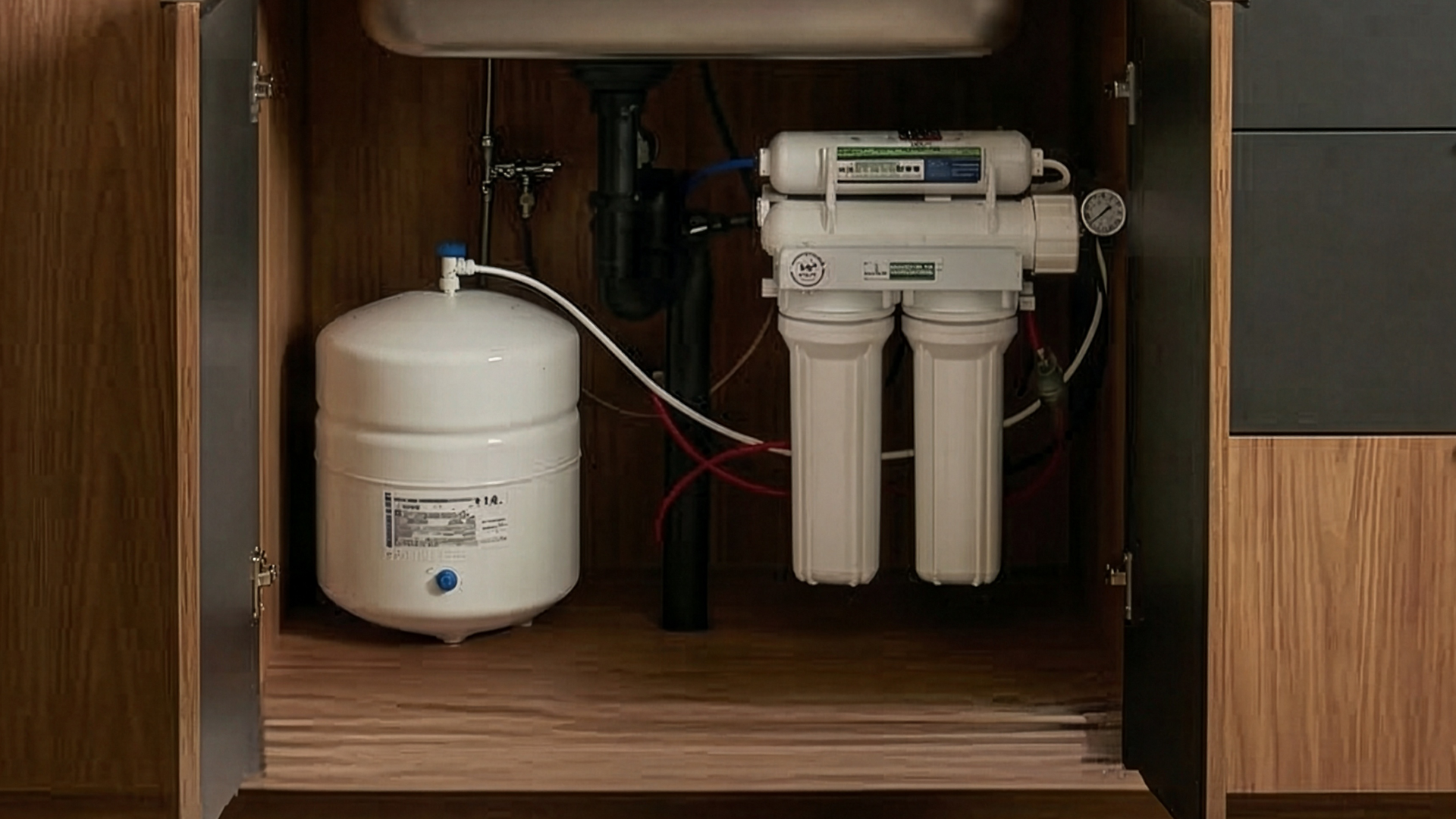
An under sink water filter is installed at a dedicated sink and connected to the cold water supply. Filtered water is then delivered through a specific drinking water or compatible mixer tap.
Under sink systems can vary dramatically in their methods. Some use carbon cartridges to improve taste and reduce chlorine, while reverse osmosis systems employ a fine membrane to remove a broader range of contaminants.
An RO system first passes water through sediment and activated carbon filters. This removes larger particles and chlorine before the water reaches the semipermeable membrane. The membrane separates many dissolved contaminants from the water, including dissolved salts, fluoride, heavy metals and PFAS. A final remineralisation stage can restore healthy trace minerals and refine the taste.
Because the system only treats water at one tap, its benefits are limited to the water from that outlet. Your bathroom taps, showers, laundry and other outlets continue to receive their water from the main supply without any RO treatment.
Can you install both systems in the same home?
Yes. A whole home water filter and an under sink reverse osmosis system are frequently installed together and can complement each other, offering different levels of treatment for different uses.
For example, a home might use a whole home system to reduce chlorine, sediment and hardness, while using RO to further reduce dissolved contaminants in their drinking water.
Whole home vs under sink water filters: side-by-side comparison
Which water filtration system is best for your household?
Different technologies address different water issues. A system designed to make your water taste better might not address hard water or chlorine in the shower, for example. Comparing the capabilities of each option against your actual goals is more useful than just picking the system with the highest number of stages.
PFAS reduction in drinking water
PFAS are a group of persistent synthetic compounds that can be found in water supplies. Their resistance to environmental breakdown makes their reduction an important consideration when choosing a system.
Reverse osmosis can reduce PFAS in drinking water by passing water through a semipermeable membrane that filters out most dissolved contaminants. This makes an under sink RO system a great option for households looking to minimise the PFAS in the water they drink and cook with.
Whole home filtration can also reduce PFAS, provided the system uses filtration media specifically designed and tested for that purpose. A suitable system can treat water used for other activities, including showering, bathing and laundry, as well as drinking and cooking.
When comparing, distinguish between systems that are tested for PFAS reduction and those that make broader claims about contaminant removal. Always seek out independent testing to verify the system’s performance and identify the compounds being tested, the reduction achieved and the amount of water treated.
Chlorine and chloramine reduction
Chlorine and chloramine are disinfectants used to treat public water supplies and control harmful microorganisms. Some homes notice them through the taste and smell of their water, or the way it feels during showers and baths.
Activated carbon is a common way to reduce chlorine. However, chloramine is a bit more difficult to remove and generally needs catalytic carbon or equivalent media. The kind of carbon, amount of media and contact time all shape the final results of treatment.
A whole home system can reduce chlorine or chloramine across the home when its stages are designed for the specific disinfectant in your supply. An under sink can do this too, but its treatment is limited to drinking and cooking water. For some homes, that’s more than enough.
Hard water, mineral deposits and limescale
Hard water contains elevated concentrations of dissolved minerals, mostly calcium and magnesium. As water is heated or evaporates, these minerals can form limescale deposits on taps, shower screens, hot water systems and appliances.
An under sink reverse osmosis system can reduce dissolved minerals in the water it treats. This can help limit mineral deposits in appliances like kettles and coffee machines when they’re filled using the filtered water. However, it doesn’t change the hardness of the water used for showering, washing and other tasks.
To improve hardness throughout the home, a system needs a proper softening stage. Ion-exchange resin reduces by exchanging calcium and magnesium ions for others, usually sodium. This reduces the minerals that cause limescale.
If deposits are affecting multiple finishes or appliances, whole home softening will be more useful than an under sink filter. RO is better suited to reducing dissolved minerals in a smaller volume of water.
Sediment, rust and other particles
Sediment can enter household water supplies via the distribution network or existing plumbing. Common particles include sand, silt, dirt and rust, which can affect water clarity and accumulate in your fixtures and appliances.
Both whole home and under sink systems can include sediment filtration, though their capacities and intended uses differ. The filtration rating matters, too. A finer filter can capture smaller particles, but it needs to be adequately sized to the property’s water flow and sediment load. Choosing an appropriate rating helps balance particle removal with maintaining a practical flow rate for the household.
Taste, smell and drinking water quality
Offputting tastes or smells are some of the most common reasons homes consider filtering their water. Chlorine is a possible cause, though dissolved minerals, organic compounds and other substances can also affect the taste and smell of your tap water.
Both whole home systems and an under sink filter can improve your drinking water through minimising chlorine and other compounds at the tap, with reverse osmosis providing even more extensive treatment, reducing a wider range of contaminants that conventional filters might not target.
The right filtration method is dependent on the actual cause of the taste or smell of their water. Carbon filtration is used for chlorine and certain other compounds, while reverse osmosis can target a much wider range.
What should you consider before choosing a water filtration system?
Comparing technologies is only one part of choosing a system. There are plenty of other factors to consider that’ll influence which option is the best for you.
Your incoming water quality
Water quality fluctuates across Australia, including in between suburbs and properties. Public water treatment, source water, distribution infrastructure and local conditions can all shape what comes out of your taps.
Some households might only want to reduce chlorine or chloramine, while others are looking to address hardness, sediment, heavy metals or specific contaminants.
Start by identifying what you actually want to improve instead of picking a system based on its stages or vague claims about water purification. Different contaminants need different methods, and no single medium can treat every quality concern.
Water testing can help discern the characteristics of your supply, including factors like hardness, chlorine concentration and what particles are in your water.
Your household's water usage
The amount of water your household uses affects the filtration capacity and flow rate required from a system.
A whole home filter needs to supply multiple outlets without restricting everyday tasks. For example, a household might want to run a shower, washing machine and kitchen tap all at once. The system needs to be sized to accommodate this demand while maintaining a suitable flow.
Household size, number of bathrooms, plumbing dimension and usage patterns all influence the right capacity for your home.
An under sink system is more limited. Its capacity needs to meet the amount of drinking and cooking water your home uses, including for filling up bottles, preparing meals or using water in appliances like coffee machines.
RO systems might also use a storage tank to hold its treated water. The capacity and membrane affect how much water is available at a given time and how quickly the system can replenish its supply.
Installation requirements and available space
Whole home and under sink systems need access to different parts of your plumbing.
A whole home filter is installed on the incoming mains water line, usually near the water meter or another suitable connection point. The available space, pipework dimensions, water pressure and access for future maintenance all need to be considered.
An under sink system needs enough cupboard space for the unit and, in the case of RO systems, a storage tank. It also needs a suitable connection to the kitchen plumbing and a dedicated tap or compatible mixer.
Installation requirements can vary between properties. Available space, existing plumbing and water pressure all need to be checked before committing to a system.
Filter replacement and ongoing costs
All systems need maintenance to sustain their performance. Replacement intervals depend on the filtration media, incoming water quality, household usage and the volume of water treated.
Whole home systems generally need periodic replacement of their filter cartridges or media. Some filters may need replacing every six months, while others can last a year or longer.
For under sink RO systems, the sediment and carbon pre-filters generally need more frequent replacement than the RO membrane. The membrane has a longer service life, but it depends on water quality, usage and maintenance.
When comparing systems, you need to consider the cost and availability of replacement filters alongside the upfront purchase and installation price, as schedules and ongoing costs can vary dramatically between models.
Choosing the right water filtration system for your home
Once you understand your water quality and household requirements, the choice becomes clearer. The right system is the one that addresses your priorities, where you need it to.

When a whole home water filter makes sense
A whole home water filter is worth considering when you’re looking to improve the water across the property instead of drinking water alone.
It might be for you if you want to:
Reduce chlorine and chloramine in water used for showers, baths and taps.
Address hard water and minimise limescale throughout your plumbing and appliances.
Capture sediment and rust before they reach household fixtures and appliances.
Reduce specific contaminants using filtration media designed for those substances.
Have filtered water available for drinking, cooking, bathing, laundry and cleaning.
The main advantage is having one system to address water issues across your entire home. You can use filtered water for everyday tasks without relying on separate filters at different taps.
When an under sink water filter makes sense
An under sink filter might be ideal when your main priority is improving the water used in your drinking and cooking.
It can be a great option if you:
Mostly want to improve the taste and smell of drinking water.
Want reverse osmosis to reduce contaminants in the kitchen.
Live in an apartment or rental where installing a whole home system isn’t practical.
Have limited space or a smaller home with less water consumption.
Want to focus on one outlet.
For homes choosing reverse osmosis, take into account the system’s membrane performance, pre-filtration, storage capacity and replacement requirements. These factors influence the quality and availability of treated drinking water.
When a combined filtration system makes sense
Some households have water quality concerns that extend beyond the kitchen but also want extra treatment for their drinking water.
Combining whole home filtration with an under sink RO system provides two complementary levels of treatment. The whole home system addresses general household water quality, while reverse osmosis provides even further treatment of your water.
For example, a household might use whole home filtration to reduce chlorine in shower water, soften hard water to limit limescale on bathroom fixtures and appliances, as well as capture sediment before it reaches plumbing. An under sink reverse osmosis system could then reduce dissolved contaminants like fluoride, nitrates and PFAS in drinking and cooking water.
Find the right water filtration system for your home with Complete Home Filtration
Choosing a system starts with understanding the water entering your property. Your local supply, plumbing, home size and usage patterns will all shape the right method and capacity you need.
The first step is to identify the water quality concerns you want to address. From there, you can compare the capabilities of whole home filters, under sink systems and reverse osmosis units to establish what’ll work the best for your home.
FAQs
Is a whole home water filter better than an under-sink filter?
Neither system is “better” than the other. A whole home filter is suited to homes concerned about water quality across the whole property, while an under sink filter focuses on drinking and cooking water. Reverse osmosis can be another layer of treatment should that be a priority.
The “better” option depends on what you’re actually concerned about and where you want filtered water to be available.
Can an under sink water filter remove PFAS?
Yes. Some under sink reverse osmosis systems can reduce PFAS by separating these dissolved contaminants from water via a semipermeable membrane. The level of reduction depends on the system’s design and tested performance.
Can a whole home water filter remove PFAS?
Some whole home systems are designed and tested to reduce PFAS, but this capability shouldn’t be assumed across all filtration systems.
The media needs to be suitable for the specific PFAS compounds being targeted and performance should be supported by independent testing.
Does a whole home water filter soften hard water?
A whole home filter can soften hard water when it includes a water-softening stage. Ion-exchange resin reduces calcium and magnesium, the minerals responsible for hardness and limescale formation.
Not every whole home filter includes a softening stage, so check the system’s configuration and confirm that it’s designed to treat hardness.
Does an under sink water filter remove chlorine?
Most under sink filters use activated carbon to reduce chlorine and improve the taste and smell of your water. RO systems also typically include carbon pre-filtyers to reduce chlorine before the water reaches the membrane.
The amount of chlorine reduced depends on the media, system design and actual performance.
Can I use a whole home filter and an under-sink filter together?
Yes. The two systems can complement each other by addressing different quality concerns. A whole home filter can treat general household water, while an under sink reverse osmosis system provides additional filtration for your drinking and cooking water.
This is perfect for homes that want property-wide treatment alongside more extensive purification at the kitchen tap.
How do I know which water filtration system my home needs?
Start by identifying the quality concerns you want to address, like chlorine, chloramine, hardness, sediment or PFAS. Then consider whether your priorities are more relevant to the kitchen, or if they apply across the entire property.
Testing can help establish what’s in your supply and determine what methods are appropriate. Always consider your household’s water usage, available space and ongoing maintenance or replacement costs.